SUS Spacers and Collars to JIS Drawings: What Drives the Price of Small Lots
Cost / 19 Oct 2026
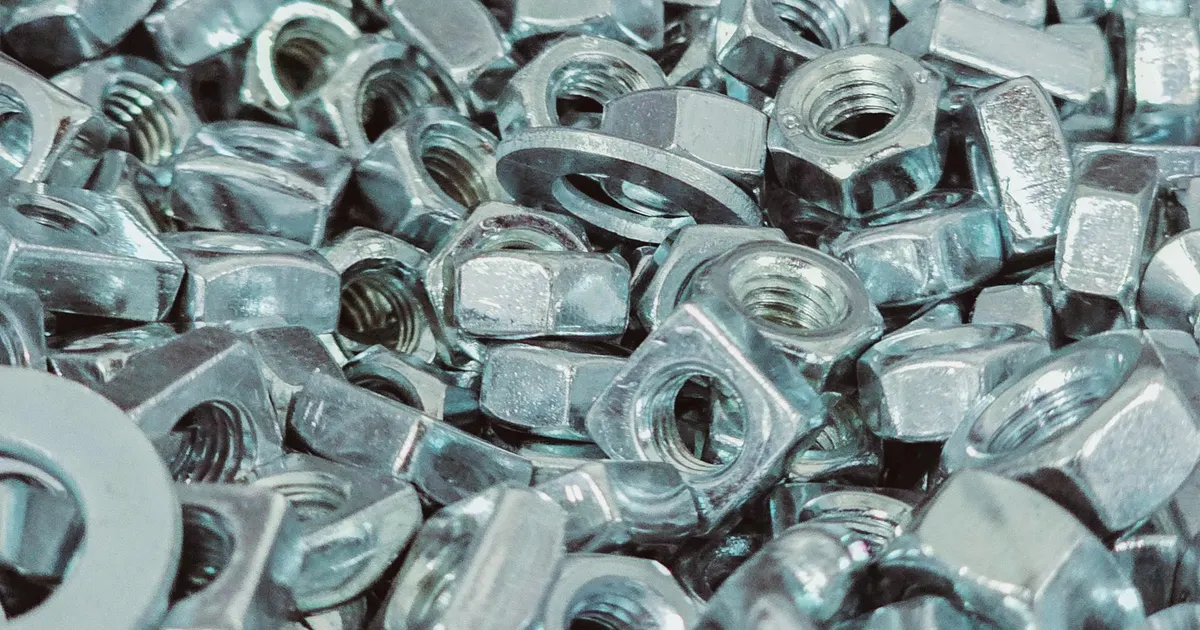
Spacers and collars are the plainest parts a machine shop turns. A short ring or tube with a bore, two flat ends and sometimes a threaded set screw hole. A drawing for one fits in a corner of a page, and a buyer expects a price to match. For a large lot it usually does. For a small lot, 10 or 50 or 200 pieces, the price looks high compared with the part, and the buyer wonders why.

This guide explains where the cost of a small lot goes, which features of a spacer or collar matter, and how a drawing can be written to hold the price down without losing function.
Where the money goes
A turning job has two kinds of cost. Fixed cost is incurred once per order. Run cost is incurred once per piece.
Fixed cost:
- Reading the drawing and planning the process.
- Programming and tooling setup.
- Loading bar and setting up the machine.
- Making and measuring the first article.
- Preparing the inspection report.
- Cleaning, counting and packing.
Run cost:
- Machine time per part, a minute or two for a plain spacer.
- Material.
- Tool wear.
- In-process checks.
For a part that takes two minutes to run, the fixed cost of an hour is the equivalent of thirty parts. At 20 pieces it makes up most of the price. At 2,000 it is a small fraction. This is why the price per piece falls so sharply with quantity.
| Lot size | Share of price from fixed cost (typical) | Relative price per piece (illustrative) |
|---|---|---|
| 10 | Most of it | 100 percent |
| 50 | More than half | About 45 percent |
| 200 | About a third | About 25 percent |
| 1,000 | Small | About 15 percent |
These figures show the shape of the curve, not a price. The real numbers depend on the part, the grade and the shop. The point holds either way: a buyer who needs spacers more than once should say so, because the shop can set up for a repeat and quote on a schedule.
The features that set the price
Length and parallelism. The faces of a spacer are what matters. A turned and parted spacer has a rough face from the cut-off and a length that varies with the tool. A facing pass on both ends gives a better length and a flatter face. Grinding both ends gives the best parallelism and costs more.
| Requirement | Typical method | Typical result |
|---|---|---|
| Length plus or minus 0.1 mm | Part off, one facing pass | Routine |
| Length plus or minus 0.05 mm | Part off and face one side, flip and face other | Routine with care |
| Length plus or minus 0.02 mm, parallelism 0.02 mm | Face both ends with a sharp tool, check each | Needs attention |
| Parallelism below 0.01 mm | Grind both ends | Adds an operation |
Bore. A bore is drilled and then bored or reamed. A plain clearance hole is cheap. A bore with a fit code, such as H7, needs a finishing step and a gauge check. A long bore relative to its diameter needs a drill with a good guide and coolant, as in the deep hole guide.
Concentricity. The bore and the outside diameter should share an axis, or the spacer is eccentric. Turning the outside and boring the inside in the same chucking keeps them within a few hundredths. Machining the two in separate setups adds error.
Faces square to the bore. If the spacer carries a bearing, the end faces must be square to the bore. This is the geometric tolerance on perpendicularity, and the geometric tolerance guide explains how it is called out. Facing and boring in one chucking gives this for free.
Edges. Spacers have four edges, and each is a place for a burr. A parted face has a small pip in the middle where the tool leaves. The drawing should say whether the pip must be removed, and what edge break applies, as in the itomen guide.
Collars and set screws
A collar is a spacer with a job: it clamps onto a shaft or locks a position. Two forms are common.
Set screw collar. A radial tapped hole takes a set screw that bites on the shaft. The hole position, the thread and the screw seat matter. A cup point screw leaves a mark on the shaft, so the shaft should be soft there or have a flat.
Clamp collar. A split ring with a screw that closes the split. The slit and the clamping screw need clean cuts, and the bore tolerance has to allow the collar to close without distorting.
Thread callouts should follow the thread guide. A small tapped hole in stainless is a place for tap breakage, and thread milling or a good tapping process helps.
Stack-up: why tolerances add
Spacers in a stack add their tolerances. Ten spacers with a length of 5 mm plus or minus 0.05 mm each give a stack length of 50 mm with a worst case error of plus or minus 0.5 mm. The statistical error is much smaller, about plus or minus 0.16 mm for a random mix, but the worst case is the one that jams a shaft or leaves a gap.
If a stack length matters, the drawing should say so. Two good answers are to match lengths in sets, so that every spacer in a set is within a few micrometres of the others, or to tighten the tolerance on the length to what the stack needs. Matching is cheaper than grinding all faces, and the shop can supply a measured set.
A worked example
A buyer needs 60 spacers for a linear stage: outer diameter 16 mm, bore 8 mm, length 12 mm, SUS304, both ends faced, parallelism 0.02 mm, burr free. The drawing gives length plus or minus 0.05 mm and a general tolerance class m for everything else.
The route is short. Bar of 16 mm, or 18 mm if the finished outside diameter has to be turned, is loaded into a lathe with a bar feeder. The bore is drilled and bored. The part is faced on one end, parted off and then picked up in soft jaws or a second spindle for the second face. A light pass takes the pip off the parted face and breaks the edge. The first piece is measured for length, parallelism and bore, and the run begins.
The cost sits in the setup, the second operation and the inspection. If the buyer had said that parallelism 0.05 mm was enough, the shop could have parted off and faced once with a good tool and saved the second operation. If the buyer had needed 0.01 mm, the faces would have gone to a grinder. A question at the quote stage, “does parallelism matter here?”, moves the price in either direction.
Counting, mixing and labelling
Small parts bring a small kind of risk: mix-ups. A spacer of 12 mm and a spacer of 12.5 mm look alike, and a bag with a few of each is a quiet failure. Good practice is a separate bag and label per size and lot, a count that is checked and not estimated, and a lot number that links to the inspection report. Where a buyer orders several sizes, the quote can ask for a part number mark on the part itself, with the cost of the marking set out. A part that cannot be marked is bagged by size.
Choosing the grade
Spacers and collars are usually made from SUS303, SUS304 or SUS316.
- SUS303 cuts fastest and is the cheapest to make in volume. It suits dry service and is not recommended for wet or salty environments. See the free cutting grades guide.
- SUS304 is the general choice, with good corrosion resistance and moderate cost.
- SUS316 or SUS316L for wet, salty or chemical service.
For small lots the cost of the grade difference is small compared with setup. The grade comparison lists the differences.
Bar and stock
Spacers are cut from tube or round bar. A spacer with a large bore relative to its outer diameter is cheaper from tube, because less metal is drilled out. Tube stock in stainless exists in common sizes, with a wall tolerance looser than a bored bar. If the bore is a tight fit, bar and boring is the usual route. The bar guide explains the options.
Small lot habits that save money
- Order a year’s quantity with delivery in releases. The shop sets up once and the fixed cost falls.
- Combine part numbers on one bar size. Several spacers cut from the same bar share setup.
- Allow standard sizes. A spacer designed around a common bar size and a standard bore needs less machining.
- Loosen what does not matter. A tight length on a part that is not stacked or clamped costs money for nothing.
- State the quantities you might need. A quote for 50, 200 and 1,000 shows the curve and lets you choose.
What to put on the drawing
- Material and condition.
- Length, parallelism and perpendicularity with datums.
- Bore fit code or limits.
- Edge condition and the parted face.
- Set screw hole position, thread and class.
- Quantity and any repeat orders.
- Marking or labelling of lots and sizes.
Checklist
- Does the length tolerance suit the function or only look tidy?
- Are both end faces parallel and square to the bore as required?
- Is the stack length a function, and if so is a matched set wanted?
- Are quantities and repeats stated?
- Is the grade right for the service?
To price a spacer or collar in a small lot, send the drawing with the quantities you may need. An engineer reads the tolerances, flags those that add cost without function and quotes within 24 business hours. The engineer follows the order and signs off the inspection before packing, and the capabilities page lists the turning routes and typical tolerances.
Questions
Why is the price per spacer so high for 20 pieces?
Setup, programming, first article measurement and bar handling cost the same for 20 pieces as for 2,000. Spread over 20 parts they dominate the price. At larger quantities the machine time is what remains, and the price per piece falls steeply.
What length tolerance is normal for a stainless spacer?
Turned and parted spacers are commonly held to plus or minus 0.05 mm on length. Plus or minus 0.02 mm is achievable with a facing pass on both ends. Tighter than that usually means grinding the faces.
Does parallelism matter on a spacer?
Yes, when the spacer clamps a bearing or sits in a stack. The two end faces must be parallel or the spacer tilts what it supports. The drawing should give a parallelism value, not leave it to the length tolerance.
Have a drawing for a stainless part?
Send it and an engineer reads the title block, quotes it within 24 business hours, and if you order we place, manage, inspect and ship the parts on one PO and one invoice.
Get a quoteRelated guides
SUS303Se and SUS303Cu Compared with SUS303: Which Free Cutting Grade to Use
SUS303Se and SUS303Cu against standard SUS303: what selenium and copper change for finish, cold forming and corrosion, and what a drawing should state.
SUS Parts for Japanese Food Machinery: Choosing Grade, Finish and Design Details
Which SUS grade and finish suit machined parts for Japanese food machinery: SUS304 or SUS316L, Ra limits, radii, burr free edges and cleaning before packing.